Download Free Air Pilot Manual Pooleys
Posted by admin- in Home -17/01/18Im starting my training for my ppl next week and i need to get the materials and equipment. I want to buy a student starter set, i have seen both on afe and pooleys and they are the same price, £220.00. AFE: Pooleys: I am very confused in which one to buy, which would you recommend? I would like to place an order today, but as its my first time and i have never bought any afe or pooleys stuff please could you advise me. Also which one has got the better books to study?
Which do you prefer? I agree: Neither. The student starter kits contain a lot of stuff you don't need at all, or don't need immediately. It's better to buy kit as and when you need it. Talk it over with your instructor. Initially you'll need nothing more than: - A kneeboard, clipboard or something along those lines. A5 size is OK in most aircraft.
You can get these at Tescos as well. Stuff some blank sheets of paper in them for your notes, and download a plog template from the internet to print a few times. (I've got one if you want mine.) - A pen or pencil, and if you buy a laminated chart, a pen that will hold on that laminated chart. - Something to erase your marks from the chart.
- A current map of the local area. The default is the laminated, CAA issued one, but the Jeppesen paper one will do just fine too. Although the Jeppesen VFR+GPS ones have a slightly different presentation of the same data, and your instructor might not like that.
Pooleys air pilot manual free pdf download, pooleys air pilot manual free pooley's air pilot's manuals pooleys air pilot publishing, pooley's air pilot's manuals are the. All customers must comply with the requirements of the Operations Manual and the relevant Pilot's Operating Handbook. The hirer must ensure that all legal documents are correct and the appropriate weight and balance calculations have been performed before the flight and that the technical log is completed at the end.
Furthermore, the CAA nav exams are based on the CAA way of presenting the data. - A ruler marked in 1:500000 and 1:250000 nautical miles, and a protractor or something else to measure angles. - The airfield map of your local airfield, and maybe those of the few airfields that you'll be visiting in the near future.
You can print these from the UK AIP, and the AIP is accessible for free via multiple sources (UK CAA, Eurocontrol, Skydemon.) - A headset. This is probably the most costly investment, but well worth the money in the long run. Yes, you can borrow these from the school but IME these are clapped out, dirty and non-functioning at times. - A good pair of sunglasses.
Non-polarized preferably. - Depending on the airfield: A high-viz vest of some sort. - Something to keep track of time. A wristwatch is good enough for PPL flying - there's no need for a stopwatch or anything fancy right now. - If you have glasses or lenses, your medical will require that you carry a spare set at all times, once you go solo.
- The checklist for the aircraft you're going to fly. Most clubs/schools will create their own, based on the aircraft POH and local peculiarities, and will provide you with one. (Read: Will sell you one.) Alternatively you can use the one in the POH itself - which should be on board anyway. But there's no need to buy them from AFE or Pooleys. - A bag to hold all that stuff. Any bag will do, although if you do get a headset of your own, it's best if the bag has a separate compartment for that headset.
(Or keep the headset in a separate headset bag - in most cases this bag is included with the headset.) Once you start studying the theory, you'll need the full set of theory books. AFE or Trevor Thom are the most common choices, but I believe Oxford now does a PPL set as well. Also get some sort of PPL Confuser, Questions and Answers Simplifier or something to practice the exams.
And you'll need an analog 'flight computer'. Again, talk to your instructor about which one is best. And see if you can get a 2nd hand one - lots of people find they don't need them anymore once they've got the licence, so they might sell them off cheap. Remember that a lot of organizations, including AFE, Pooleys and your school/club, view flight students as nothing more than walking wallets. It's their goal to extract as much money from you as they can, and it's your job to resist that. From a uk ex-instructor point of view knowing your going commercial CRP-5 which is the commercial nav computer which is used in the exams.
But you won't need it until you start the NAV phase of training. Books: EBAY has most of them but see which ones your school uses both are as good as each other. Clip Board initially you don't need one but as you go on for PPL a A5 one will do and some means of attaching it to your knee. Or you can purchase at great cost one from a pilot shop. A4 later for instrument flying. Chart wise they will sell them in the school hopefully unfolded.
Then you instructor can show you how to fold it properly without fighting against the creases that the shop has put in it. Don't go near Jeps charts until after you have got your PPL. It will just confuse you. Rule's pens and all the rest you can get from tescos as you need them.
And a watch any one will do that is clear digital or analogue as you prefer. The log book is the biggest first thing you need to get quickly Basically get one which says commercial and either JAR or EASA compliant. Don't get a FAA compliant one. Quote: Books: EBAY has most of them but see which ones your school uses both are as good as each other. EBay is fine, just make sure the Air Law book is as up to date as possible. With EASA taking over from the CAA, there are loads of changes at the moment. Also, I don't know how up to date the CAA exams are in this respect.
But a three-year old Air Law book is worth less than the paper it's printed on. As far as the rest of the books series is concerned: No problem to use books that are slightly out of date. Quote: Don't go near Jeps charts until after you have got your PPL. Despite being a big fan of the Jeppesen charts, I agree with this. The advantage of the Jeps charts is that they have a uniform presentation across the whole of Europe, and quite a few places beyond. But the nav books, nav exam and other materials are all based on the CAAs interpretation of the ICAO way of presenting things, so it's best to use those charts initially. You can always switch to Jeppesen once you got your PPL and are going abroad.
Quote: eBay is fine, just make sure the Air Law book is as up to date as possible. With EASA taking over from the CAA, there are loads of changes at the moment. Also, I don't know how up to date the CAA exams are in this respect. But a three-year old Air Law book is worth less than the paper it's printed on. I also know that some Trevor Thom 7 (R/T) books which are still being sold are based on the old ATSOCAS and not the current ones. I got mine when the system had only just changed (a good 4 years ago I think), so it was understandable then but be careful now.
As a student it's pretty confusing if you're learning the wrong services! I'm assuming (so am probably wrong) that a new edition has been published (FlightStore says 2011), but it doesn't seem to be circulating yet from certain places. If I were doing it again I wouldn't bother with the R/T book anyway, I'd just download CAP 413 and the GA supplement. I also know that some Trevor Thom 7 (R/T) books which are still being sold are based on the old ATSOCAS and not the current ones. I got mine when the system had only just changed (a good 4 years ago I think), so it was understandable then but be careful now. As a student it's pretty confusing if you're learning the wrong services! I'm assuming (so am probably wrong) that a new edition has been published (FlightStore says 2011), but it doesn't seem to be circulating yet from certain places.
If I were doing it again I wouldn't bother with the R/T book anyway, I'd just download CAP 413 and the GA supplement. My 2009 Trevor Thom covers the new ATSOCAS stuff, so a 2011 edition certainly would. To be fair, there's a lot of stuff in the book that isn't in the CAP 413 supplement - it's far from useless. I realise this is going against the grain, but I purchased the Pooley's kit at the recommendation of the school.
They weren't pushy about it, the first day I went in there I asked for suggestions and this is what they suggested. (Slight aside, Pooley's Air Pilot's Manual series is the same as the oft-quoted Trevor Thom). I've used every single part of the kit during my PPL training over the past four months, I am about 85% done. I am not sure where you'd find an appropriate ruler in Tescos: the ruler markings are designed to work with 1:500,000 and 1:250,000 maps. The main problem with the Pooley's kit is the bag itself. It's simply not the best dimensions for the folded map.
In addition the zip fasteners are less than robust, mine broke a few days after I received it. What is missing from the kit? A suitable Q&A book and something to clean the map etc from the permananent markers. For the Q&A book, I use both the Pooley's Q&A book and the AFE Simplifier.
The AFE has a cram section for each exam which I found very useful, but the Pooley's Q&A has very good colour explanations. To clean the map there are a few suggestions, but probably a dry whiteboard marker pen and a cloth is the most convenient. Others suggest nail varnish remover. Being an electronics engineer, I have isopropyl alcohol (IPA) in the lab, so I use that, it's cheaper than nail varnish.
You may need a better flight computer than the one in the kit for your CPL as others have mentioned, I am not intending to do a CPL so I can't really comment further. Download Cisco Asa Firewall Ios Image For Gns3. I am also not convinced about the kneeboard supplied yet, I can see me changing that when I spot something more appropriate. This is the one very slight disadvantage of being a left-hander! I naturally put the kneeboard on my left leg being left handed, but sitting in the left seat the knee board won't open as there's a door in the way!
So I have it on my right leg but it's not the most comfortable for writing. Cheers, Howard.
Pooleys, AFE and SkyDemon all compile their (our) own plates from raw data. This is completely outside the scope of the AIP because as Steve said above, the AIP only covers licensed airfields (and it's static PDF content). There are over 500 airfields in the UK, most of which are covered by Pooleys/AFE/SkyDemon but only around 100 are in the AIP. If flying mainly IFR you probably have no need to care. SkyDemon didn't license existing plates because we have the raw data, which means we can draw our own plates and adjust them to the desired display medium (print, device, etc).
Popular Posts
- Download Free Air Pilot Manual Pooleys
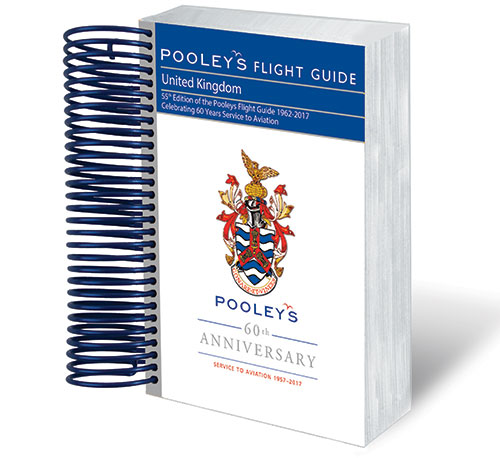 Download Free Air Pilot Manual Pooleys Rating: 3,7/5 6780votes
Im starting my training for my ppl next week and i need to get the materials and equipment. I want to buy a student starter set, i have seen both on afe and pooleys and they are the same price, £220.00. AFE: Pooleys: I am very confused in which one to buy, which would you recommend? I would like to place an order today, but as its my first time and i have never bought any afe or pooleys stuff please could you advise me. Also which one has got the better books to study?
Which do you prefer? I agree: Neither. The student starter kits contain a lot of stuff you don't need at all, or don't need immediately. It's better to buy kit as and when you need it. Talk it over with your instructor. Initially you'll need nothing more than: - A kneeboard, clipboard or something along those lines. A5 size is OK in most aircraft.
You can get these at Tescos as well. Stuff some blank sheets of paper in them for your notes, and download a plog template from the internet to print a few times. (I've got one if you want mine.) - A pen or pencil, and if you buy a laminated chart, a pen that will hold on that laminated chart. - Something to erase your marks from the chart.
- A current map of the local area. The default is the laminated, CAA issued one, but the Jeppesen paper one will do just fine too. Although the Jeppesen VFR+GPS ones have a slightly different presentation of the same data, and your instructor might not like that.
Pooleys air pilot manual free pdf download, pooleys air pilot manual free pooley's air pilot's manuals pooleys air pilot publishing, pooley's air pilot's manuals are the. All customers must comply with the requirements of the Operations Manual and the relevant Pilot's Operating Handbook. The hirer must ensure that all legal documents are correct and the appropriate weight and balance calculations have been performed before the flight and that the technical log is completed at the end.
Furthermore, the CAA nav exams are based on the CAA way of presenting the data. - A ruler marked in 1:500000 and 1:250000 nautical miles, and a protractor or something else to measure angles. - The airfield map of your local airfield, and maybe those of the few airfields that you'll be visiting in the near future.
You can print these from the UK AIP, and the AIP is accessible for free via multiple sources (UK CAA, Eurocontrol, Skydemon.) - A headset. This is probably the most costly investment, but well worth the money in the long run. Yes, you can borrow these from the school but IME these are clapped out, dirty and non-functioning at times. - A good pair of sunglasses.
Non-polarized preferably. - Depending on the airfield: A high-viz vest of some sort. - Something to keep track of time. A wristwatch is good enough for PPL flying - there's no need for a stopwatch or anything fancy right now. - If you have glasses or lenses, your medical will require that you carry a spare set at all times, once you go solo.
- The checklist for the aircraft you're going to fly. Most clubs/schools will create their own, based on the aircraft POH and local peculiarities, and will provide you with one. (Read: Will sell you one.) Alternatively you can use the one in the POH itself - which should be on board anyway. But there's no need to buy them from AFE or Pooleys. - A bag to hold all that stuff. Any bag will do, although if you do get a headset of your own, it's best if the bag has a separate compartment for that headset.
(Or keep the headset in a separate headset bag - in most cases this bag is included with the headset.) Once you start studying the theory, you'll need the full set of theory books. AFE or Trevor Thom are the most common choices, but I believe Oxford now does a PPL set as well. Also get some sort of PPL Confuser, Questions and Answers Simplifier or something to practice the exams.
And you'll need an analog 'flight computer'. Again, talk to your instructor about which one is best. And see if you can get a 2nd hand one - lots of people find they don't need them anymore once they've got the licence, so they might sell them off cheap. Remember that a lot of organizations, including AFE, Pooleys and your school/club, view flight students as nothing more than walking wallets. It's their goal to extract as much money from you as they can, and it's your job to resist that. From a uk ex-instructor point of view knowing your going commercial CRP-5 which is the commercial nav computer which is used in the exams.
Download Free Software Smart Designer X4.5 Free there. But you won't need it until you start the NAV phase of training. Books: EBAY has most of them but see which ones your school uses both are as good as each other. Clip Board initially you don't need one but as you go on for PPL a A5 one will do and some means of attaching it to your knee. Or you can purchase at great cost one from a pilot shop. A4 later for instrument flying. Chart wise they will sell them in the school hopefully unfolded.
Then you instructor can show you how to fold it properly without fighting against the creases that the shop has put in it. Don't go near Jeps charts until after you have got your PPL. It will just confuse you. Rule's pens and all the rest you can get from tescos as you need them.
And a watch any one will do that is clear digital or analogue as you prefer. The log book is the biggest first thing you need to get quickly Basically get one which says commercial and either JAR or EASA compliant. Don't get a FAA compliant one. Quote: Books: EBAY has most of them but see which ones your school uses both are as good as each other. EBay is fine, just make sure the Air Law book is as up to date as possible. With EASA taking over from the CAA, there are loads of changes at the moment. Also, I don't know how up to date the CAA exams are in this respect.
But a three-year old Air Law book is worth less than the paper it's printed on. As far as the rest of the books series is concerned: No problem to use books that are slightly out of date. Quote: Don't go near Jeps charts until after you have got your PPL. Despite being a big fan of the Jeppesen charts, I agree with this. The advantage of the Jeps charts is that they have a uniform presentation across the whole of Europe, and quite a few places beyond. But the nav books, nav exam and other materials are all based on the CAAs interpretation of the ICAO way of presenting things, so it's best to use those charts initially. You can always switch to Jeppesen once you got your PPL and are going abroad.
Quote: eBay is fine, just make sure the Air Law book is as up to date as possible. With EASA taking over from the CAA, there are loads of changes at the moment. Also, I don't know how up to date the CAA exams are in this respect. But a three-year old Air Law book is worth less than the paper it's printed on. I also know that some Trevor Thom 7 (R/T) books which are still being sold are based on the old ATSOCAS and not the current ones. I got mine when the system had only just changed (a good 4 years ago I think), so it was understandable then but be careful now.
As a student it's pretty confusing if you're learning the wrong services! I'm assuming (so am probably wrong) that a new edition has been published (FlightStore says 2011), but it doesn't seem to be circulating yet from certain places. If I were doing it again I wouldn't bother with the R/T book anyway, I'd just download CAP 413 and the GA supplement. I also know that some Trevor Thom 7 (R/T) books which are still being sold are based on the old ATSOCAS and not the current ones. I got mine when the system had only just changed (a good 4 years ago I think), so it was understandable then but be careful now. As a student it's pretty confusing if you're learning the wrong services! I'm assuming (so am probably wrong) that a new edition has been published (FlightStore says 2011), but it doesn't seem to be circulating yet from certain places.
If I were doing it again I wouldn't bother with the R/T book anyway, I'd just download CAP 413 and the GA supplement. My 2009 Trevor Thom covers the new ATSOCAS stuff, so a 2011 edition certainly would. To be fair, there's a lot of stuff in the book that isn't in the CAP 413 supplement - it's far from useless. I realise this is going against the grain, but I purchased the Pooley's kit at the recommendation of the school.
They weren't pushy about it, the first day I went in there I asked for suggestions and this is what they suggested. (Slight aside, Pooley's Air Pilot's Manual series is the same as the oft-quoted Trevor Thom). I've used every single part of the kit during my PPL training over the past four months, I am about 85% done. I am not sure where you'd find an appropriate ruler in Tescos: the ruler markings are designed to work with 1:500,000 and 1:250,000 maps. The main problem with the Pooley's kit is the bag itself. It's simply not the best dimensions for the folded map.
In addition the zip fasteners are less than robust, mine broke a few days after I received it. What is missing from the kit? A suitable Q&A book and something to clean the map etc from the permananent markers. For the Q&A book, I use both the Pooley's Q&A book and the AFE Simplifier.
The AFE has a cram section for each exam which I found very useful, but the Pooley's Q&A has very good colour explanations. To clean the map there are a few suggestions, but probably a dry whiteboard marker pen and a cloth is the most convenient. Others suggest nail varnish remover. Being an electronics engineer, I have isopropyl alcohol (IPA) in the lab, so I use that, it's cheaper than nail varnish.
You may need a better flight computer than the one in the kit for your CPL as others have mentioned, I am not intending to do a CPL so I can't really comment further. I am also not convinced about the kneeboard supplied yet, I can see me changing that when I spot something more appropriate. This is the one very slight disadvantage of being a left-hander! I naturally put the kneeboard on my left leg being left handed, but sitting in the left seat the knee board won't open as there's a door in the way!
So I have it on my right leg but it's not the most comfortable for writing. Cheers, Howard.
Pooleys, AFE and SkyDemon all compile their (our) own plates from raw data. This is completely outside the scope of the AIP because as Steve said above, the AIP only covers licensed airfields (and it's static PDF content). There are over 500 airfields in the UK, most of which are covered by Pooleys/AFE/SkyDemon but only around 100 are in the AIP. If flying mainly IFR you probably have no need to care. SkyDemon didn't license existing plates because we have the raw data, which means we can draw our own plates and adjust them to the desired display medium (print, device, etc).
- Download Free Air Pilot Manual Pooleys Download Free Air Pilot Manual Pooleys Rating: 3,7/5 6780votes
Im starting my training for my ppl next week and i need to get the materials and equipment. I want to buy a student starter set, i have seen both on afe and pooleys and they are the same price, £220.00. AFE: Pooleys: I am very confused in which one to buy, which would you recommend? I would like to place an order today, but as its my first time and i have never bought any afe or pooleys stuff please could you advise me. Also which one has got the better books to study?
Which do you prefer? I agree: Neither. The student starter kits contain a lot of stuff you don't need at all, or don't need immediately. It's better to buy kit as and when you need it. Talk it over with your instructor. Initially you'll need nothing more than: - A kneeboard, clipboard or something along those lines. A5 size is OK in most aircraft.
You can get these at Tescos as well. Stuff some blank sheets of paper in them for your notes, and download a plog template from the internet to print a few times. (I've got one if you want mine.) - A pen or pencil, and if you buy a laminated chart, a pen that will hold on that laminated chart. - Something to erase your marks from the chart.
- A current map of the local area. The default is the laminated, CAA issued one, but the Jeppesen paper one will do just fine too. Although the Jeppesen VFR+GPS ones have a slightly different presentation of the same data, and your instructor might not like that.
Pooleys air pilot manual free pdf download, pooleys air pilot manual free pooley's air pilot's manuals pooleys air pilot publishing, pooley's air pilot's manuals are the. All customers must comply with the requirements of the Operations Manual and the relevant Pilot's Operating Handbook. The hirer must ensure that all legal documents are correct and the appropriate weight and balance calculations have been performed before the flight and that the technical log is completed at the end.
Furthermore, the CAA nav exams are based on the CAA way of presenting the data. - A ruler marked in 1:500000 and 1:250000 nautical miles, and a protractor or something else to measure angles. - The airfield map of your local airfield, and maybe those of the few airfields that you'll be visiting in the near future.
You can print these from the UK AIP, and the AIP is accessible for free via multiple sources (UK CAA, Eurocontrol, Skydemon.) - A headset. This is probably the most costly investment, but well worth the money in the long run. Yes, you can borrow these from the school but IME these are clapped out, dirty and non-functioning at times. - A good pair of sunglasses.
Non-polarized preferably. - Depending on the airfield: A high-viz vest of some sort. - Something to keep track of time. A wristwatch is good enough for PPL flying - there's no need for a stopwatch or anything fancy right now. - If you have glasses or lenses, your medical will require that you carry a spare set at all times, once you go solo.
- The checklist for the aircraft you're going to fly. Most clubs/schools will create their own, based on the aircraft POH and local peculiarities, and will provide you with one. (Read: Will sell you one.) Alternatively you can use the one in the POH itself - which should be on board anyway. But there's no need to buy them from AFE or Pooleys. - A bag to hold all that stuff. Any bag will do, although if you do get a headset of your own, it's best if the bag has a separate compartment for that headset.
(Or keep the headset in a separate headset bag - in most cases this bag is included with the headset.) Once you start studying the theory, you'll need the full set of theory books. AFE or Trevor Thom are the most common choices, but I believe Oxford now does a PPL set as well. Also get some sort of PPL Confuser, Questions and Answers Simplifier or something to practice the exams.
And you'll need an analog 'flight computer'. Again, talk to your instructor about which one is best. And see if you can get a 2nd hand one - lots of people find they don't need them anymore once they've got the licence, so they might sell them off cheap. Remember that a lot of organizations, including AFE, Pooleys and your school/club, view flight students as nothing more than walking wallets. It's their goal to extract as much money from you as they can, and it's your job to resist that. From a uk ex-instructor point of view knowing your going commercial CRP-5 which is the commercial nav computer which is used in the exams.
But you won't need it until you start the NAV phase of training. Books: EBAY has most of them but see which ones your school uses both are as good as each other. Clip Board initially you don't need one but as you go on for PPL a A5 one will do and some means of attaching it to your knee. Or you can purchase at great cost one from a pilot shop. A4 later for instrument flying. Chart wise they will sell them in the school hopefully unfolded.
Then you instructor can show you how to fold it properly without fighting against the creases that the shop has put in it. Don't go near Jeps charts until after you have got your PPL. It will just confuse you. Rule's pens and all the rest you can get from tescos as you need them.
And a watch any one will do that is clear digital or analogue as you prefer. The log book is the biggest first thing you need to get quickly Basically get one which says commercial and either JAR or EASA compliant. Don't get a FAA compliant one. Quote: Books: EBAY has most of them but see which ones your school uses both are as good as each other. EBay is fine, just make sure the Air Law book is as up to date as possible. With EASA taking over from the CAA, there are loads of changes at the moment. Also, I don't know how up to date the CAA exams are in this respect.
But a three-year old Air Law book is worth less than the paper it's printed on. As far as the rest of the books series is concerned: No problem to use books that are slightly out of date. Quote: Don't go near Jeps charts until after you have got your PPL. Despite being a big fan of the Jeppesen charts, I agree with this. The advantage of the Jeps charts is that they have a uniform presentation across the whole of Europe, and quite a few places beyond. But the nav books, nav exam and other materials are all based on the CAAs interpretation of the ICAO way of presenting things, so it's best to use those charts initially. You can always switch to Jeppesen once you got your PPL and are going abroad.
Quote: eBay is fine, just make sure the Air Law book is as up to date as possible. With EASA taking over from the CAA, there are loads of changes at the moment. Also, I don't know how up to date the CAA exams are in this respect. But a three-year old Air Law book is worth less than the paper it's printed on. I also know that some Trevor Thom 7 (R/T) books which are still being sold are based on the old ATSOCAS and not the current ones. I got mine when the system had only just changed (a good 4 years ago I think), so it was understandable then but be careful now.
As a student it's pretty confusing if you're learning the wrong services! I'm assuming (so am probably wrong) that a new edition has been published (FlightStore says 2011), but it doesn't seem to be circulating yet from certain places. If I were doing it again I wouldn't bother with the R/T book anyway, I'd just download CAP 413 and the GA supplement. I also know that some Trevor Thom 7 (R/T) books which are still being sold are based on the old ATSOCAS and not the current ones. I got mine when the system had only just changed (a good 4 years ago I think), so it was understandable then but be careful now. As a student it's pretty confusing if you're learning the wrong services! I'm assuming (so am probably wrong) that a new edition has been published (FlightStore says 2011), but it doesn't seem to be circulating yet from certain places.
If I were doing it again I wouldn't bother with the R/T book anyway, I'd just download CAP 413 and the GA supplement. My 2009 Trevor Thom covers the new ATSOCAS stuff, so a 2011 edition certainly would. To be fair, there's a lot of stuff in the book that isn't in the CAP 413 supplement - it's far from useless. I realise this is going against the grain, but I purchased the Pooley's kit at the recommendation of the school.
They weren't pushy about it, the first day I went in there I asked for suggestions and this is what they suggested. (Slight aside, Pooley's Air Pilot's Manual series is the same as the oft-quoted Trevor Thom). I've used every single part of the kit during my PPL training over the past four months, I am about 85% done. I am not sure where you'd find an appropriate ruler in Tescos: the ruler markings are designed to work with 1:500,000 and 1:250,000 maps. The main problem with the Pooley's kit is the bag itself. It's simply not the best dimensions for the folded map.
In addition the zip fasteners are less than robust, mine broke a few days after I received it. What is missing from the kit? A suitable Q&A book and something to clean the map etc from the permananent markers. For the Q&A book, I use both the Pooley's Q&A book and the AFE Simplifier.
The AFE has a cram section for each exam which I found very useful, but the Pooley's Q&A has very good colour explanations. To clean the map there are a few suggestions, but probably a dry whiteboard marker pen and a cloth is the most convenient. Others suggest nail varnish remover. Being an electronics engineer, I have isopropyl alcohol (IPA) in the lab, so I use that, it's cheaper than nail varnish.
You may need a better flight computer than the one in the kit for your CPL as others have mentioned, I am not intending to do a CPL so I can't really comment further. I am also not convinced about the kneeboard supplied yet, I can see me changing that when I spot something more appropriate. This is the one very slight disadvantage of being a left-hander! I naturally put the kneeboard on my left leg being left handed, but sitting in the left seat the knee board won't open as there's a door in the way!
So I have it on my right leg but it's not the most comfortable for writing. Cheers, Howard.
Pooleys, AFE and SkyDemon all compile their (our) own plates from raw data. This is completely outside the scope of the AIP because as Steve said above, the AIP only covers licensed airfields (and it's static PDF content). There are over 500 airfields in the UK, most of which are covered by Pooleys/AFE/SkyDemon but only around 100 are in the AIP. If flying mainly IFR you probably have no need to care. SkyDemon didn't license existing plates because we have the raw data, which means we can draw our own plates and adjust them to the desired display medium (print, device, etc).